

























A good rangefinder changes how you play.
Not in a magical way.
In a practical way.
You stop guessing.
You stop walking back and forth to sprinkler heads.
You pick a target. You commit. You swing.
That’s why a rangefinder in golf has become normal now, not “extra”. And in 2026, the options are honestly overwhelming. Every rangefinder claim to be fast, accurate, and “tour level”.
So, let’s keep it simple.
If you’re buying a rangefinder this year, these are the five features that actually matter.
1) A Slope Mode You Can Switch Off (Properly)
Slope is useful.
Especially on hilly courses.
It gives you “plays-like” yardage, not just the raw number.
But here’s the catch.
In competitions, slope is often not allowed unless it’s disabled. The Rules of Golf allow distance-measuring devices under Rule 4.3, but a committee can restrict them, and “extra” features like slope-adjusted distance can get you in trouble if you use them in comp play.
So, the feature you want is not just “slope”.
You want a slope with a clear on/off switch.
That way, your rangefinder in golf works for practice rounds and tournament days.
No confusion. No awkward rules talk on the first tee.
You’ll see this “toggle” idea in a lot of 2026 picks and reviews, too, because it’s become a must-have, not a bonus.
2) Fast Flag Lock + Vibration (Because Real Play Has Pressure)
Most golfers don’t struggle with distance.
They struggle with speed.
You aim. You shoot.
The device grabs the trees behind the green.
Now you do it again. And again.
In 2026, a good rangefinder should lock onto the flag quickly and confirm it with a vibration or clear indicator. Many modern models highlight “flag-lock vibration” because it genuinely saves time and reduces second-guessing.
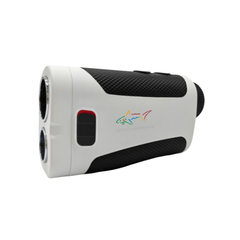
GolfBuy’s PGM mini pocket model, for example, calls out flag-lock vibration and slope in a compact build, which is exactly the kind of practical feature mix golfers look for right now.
If you play weekend golf with a group, this matters.
It keeps the round moving.
And yes, it makes a rangefinder in golf feel like a tool, not a gadget.
3) A Display You Can Read in the Indian Sun
This one sounds obvious.
But it’s the reason many people “own” a rangefinder and still don’t use it.
If you play in bright conditions, a dim or cluttered display becomes annoying fast.
You want a clean view.
Sharp numbers.
And enough clarity that you can read it without squinting.
Some 2026 models are being praised specifically for OLED screens and viewfinder readability, which tells you where brands are focusing now.
When you test a rangefinder, don’t just look at the yardage.
Look at how quickly your eye finds the yardage.
That’s the difference between using it every hole and using it twice a round.
4) Rechargeable Battery + Modern Charging
In 2026, buying a rangefinder that constantly eats batteries feels dated.
Not wrong. Just annoying.
Look for rechargeable units.
Even better if it uses USB-C.
GolfBuy’s rangefinder collection includes rechargeable options, and the PGM pocket model mentions Type-C charging, which is what most golfers prefer now.
Why it matters:
You’ll actually keep it charged.
And you won’t be stuck hunting for a battery the morning of a tee time.
A rangefinder in golf should remove friction, not add it.
5) Build Quality That Matches How You Play
Be honest about your round.
Do you walk?
Do you ride?
Do you toss your bag in the boot and drive to a new course every weekend?
Then you need durability features that fit your style.
Two things help a lot:
A magnetic mount.
It’s ridiculously convenient on carts. Many golfers now expect a rangefinder to stick to the cart frame so it’s always within reach.
Weather resistance.
Monsoon golf is real. So are early-morning dew rounds. A more premium rangefinder category is often reviewed with water resistance as a key decision point in 2026.
If you’re spending money, spend it on reliability.
That’s what you notice after six months.
A Quick Buying Shortcut (That Works)
If you’re stuck between two models, do this:
Choose the one you can read faster.
Choose the one with the cleanest slope toggle.
Choose the one you’ll actually carry and use.
Because the best rangefinder in golf is the one that stays in your hand, not the one that stays in the pouch.
GolfBuy keeps a dedicated rangefinder section, so you can compare models without digging through unrelated accessories.
Small FAQ People Ask Before They Buy
Is a rangefinder in golf allowed in tournaments?
Often yes, but it depends on the event rules. The Rules allow distance-measuring devices, but committees can restrict use, and features like slope must be disabled when not permitted.
Laser or GPS?
If you love exact flag yardages, go laser.
If you want front/middle/back and hole context, hybrid GPS+laser options are becoming more common in 2026.
Do I need a slope?
For casual play and practice, it’s genuinely helpful.
Just make sure it can be turned off cleanly.