
























Quick Answer
The main difference between golf shoes and sneakers is the job each one is built for. Golf shoes are designed to hold your feet steady through a swing on grass, using removable spikes or a built-in sole pattern, while sneakers cover everything from casual shoes to running and trail shoes, all made for other activities. The Equipment Rules say that shoes which help a player obtain a firm stance may be worn, which is permission and not a requirement, and clubs can set their own rules on what players wear.

|
Golf shoes |
Sneakers |
|
|
Outsole and grip |
Removable spikes or moulded nubs made to hold turf |
Depends on the type: walking, running or trail soles are made for other jobs |
|
Support |
Designed with the sideways and rotating load of a swing in mind, though it varies by model |
Running shoes are built around forward movement, and support varies by model |
|
Weather protection |
Many have some water resistance, and some are fully waterproof |
Varies widely, and many have none |
|
Weight and cushioning |
Lighter and less rigid than before |
Many are light and soft |
|
Rules at clubs |
Allowed under the Rules, though a club can limit deep-penetrating spikes |
The club decides, and some say no |
|
Everyday use |
Some spikeless pairs look like sneakers |
Made for it |
Introduction
Golf-specific shoes now look more like sneakers than ever, and a hiking-style shoe is even being pitched to golfers.
If the two look alike, why buy a pair made for golf? During a swing your feet help you stay planted as your body rotates, and a golf shoe is designed around that. But you do not need golf shoes in every situation, and the proof behind some big claims is narrower than the sales talk suggests.
This guide takes the claims one at a time. It explains what a golf shoe is, how it differs from a sneaker, what the Rules of Golf and Indian clubs say, and how heat and monsoon rounds change the choice. It also separates tested findings from untested claims.
A round can mean several hours of walking or standing, depending on the course and how you get around, so fit and comfort matter as much as grip.
What Are Golf Shoes?

A golf shoe is a shoe made to keep your feet steady while you swing a club on grass. Golf's equipment rules describe the aim as shoes that help a player obtain a firm stance, and every other feature on the shoe supports that job.
What makes a shoe a golf shoe?
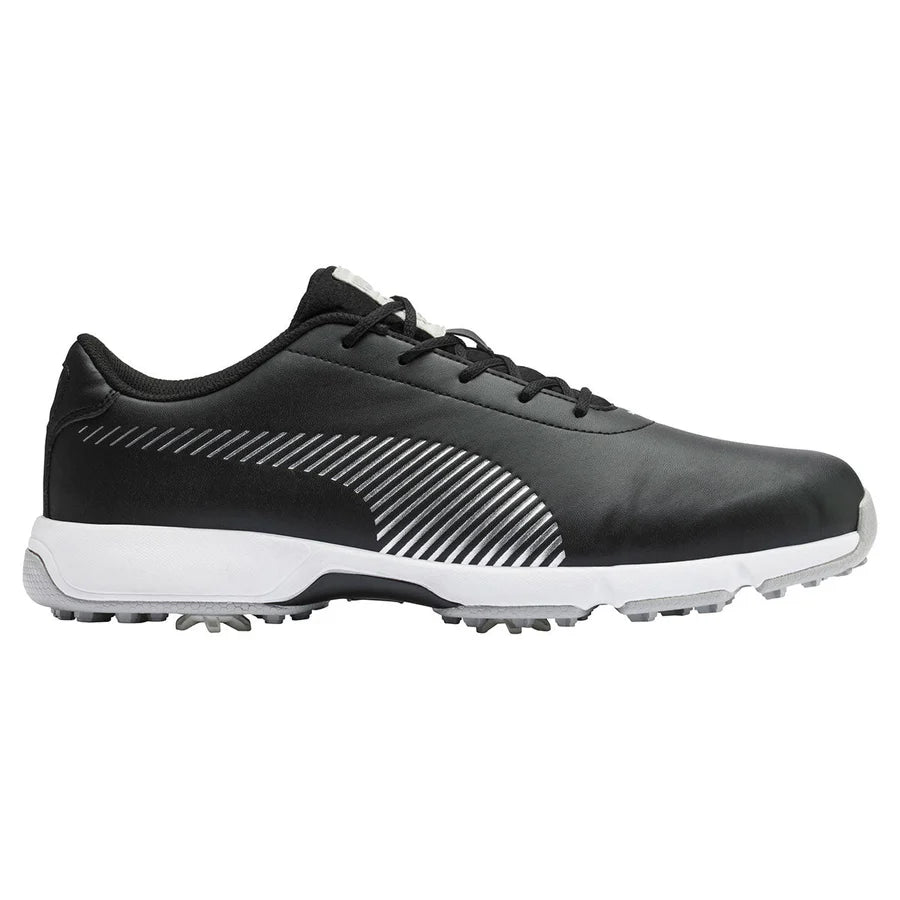
The outsole matters most. Golf shoe traction comes from removable spikes or a built-in sole pattern, and it is designed to hold the foot in place during the swing. Above it sit a midsole that cushions the walk and an upper made of leather, synthetic material or knit. Some pairs use a dial or a similar system in place of laces.
Spiked, spikeless and sneaker-style golf shoes
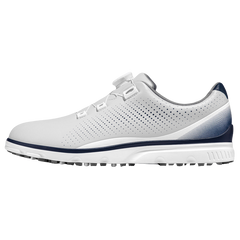
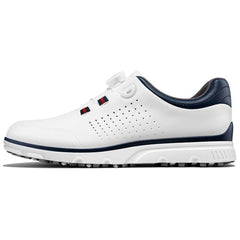
Golf shoes fall into two traction types. Spiked golf shoes use removable traction cleats attached to the outsole, and the attachment system depends on the maker and model. These soft spikes are not the same as traditional metal spikes. Spikeless shoes use fixed, moulded nubs built into the sole. Sneaker-style is something else. It describes how a shoe looks, not how its sole works, so it is a style and not a third traction type.
Traditional metal spikes were forbidden or restricted on many courses after they caused more surface damage to courses and greens. That led to alternative spikes that penetrate only several millimetres into the turf.
How Are Golf Shoes Different from Sneakers?

Sneakers is a broad word. It covers casual, running, training, trail and walking shoes, and each is built for a different job. So these are typical differences, not rules.
Grip on wet grass versus wet pavement
Everyday and running soles are made for steps on hard, flat ground. One golf magazine notes that running shoe traction is meant for steps on surfaces like dirt or sawdust trails, not for holding the foot against sideways force in a swing. Grass is also a different surface from a gym floor. When researchers tested golf shoes, they used grass-covered force platforms outdoors, because earlier lab tests on artificial turf change how spikes penetrate the ground. Even a golf-specific outsole cannot remove the risk of slipping. Wet grass, mud, slope and worn spikes or nubs all affect grip.
Are trail-running shoes suitable for golf?
Trail shoes may grip well on loose, uneven ground, but that does not show how they perform in a golf swing. Lugs made for a stride are not the same as traction made to hold your feet through a rotation, and the studies below did not test trail shoes. For casual practice where the club allows it, a trail shoe may be fine.
Side support and stability
A golf swing loads your feet sideways and in rotation, so golf shoes are designed with that in mind. Stability does not come from one feature. It comes from the outsole shape and traction layout, the midsole, heel support and fit working together, and these differ from shoe to shoe. That is why a golf shoe is not automatically more stable than every sneaker, and why cushioning and stability are not opposites.
Cushioning and walking comfort
A 2026 feature describes current best sellers as lighter, more athletic, less rigid and friendlier for off-course use than older golf shoes.
Waterproof, water-resistant and breathable
Many golf shoes come with at least some water resistance, while athletic shoes mostly do not. But waterproofing belongs to a particular model, not to golf shoes as a group. Some are fully waterproof, some resist only light rain, and plenty of sneakers have weatherproof versions too. Read how the maker describes the shoe.
One well-known waterproof, breathable membrane is GORE-TEX, whose maker says its footwear lets sweat vapour escape without letting water in. Other waterproof shoes may be built differently. The cost of a membrane can be airflow. In consistently hot, dry weather, a shoe without one can feel more ventilated and quick drying, although drying also depends on the upper, the lining and how wet the shoe gets.
Why Are Golf Shoes Built Differently from Running Shoes?

Forward motion versus a rotating swing
Running shoes are designed around repeated forward movement, while a golf swing also loads your feet sideways and in rotation. A footwear specialist at a sportswear brand that sells golf shoes says a genuine runner, designed to propel you forward, can greatly inhibit your ability to coil in the swing. He adds that some runners and cross-trainers can be okay, and his rule of thumb is to practise in the shoes you play in. His employer sells golf shoes, so treat this as an informed opinion and not a neutral test.
What the evidence shows, and what it does not
Two peer-reviewed studies are worth knowing, and both come from the same research team. The first, from 2008, followed 24 golfers hitting from natural turf in three shoes: metal spikes, alternative spikes and a flat-soled shoe. With a driver, the metal-spike shoe allowed significantly more torque at the back foot than the flat-soled shoe. There was no significant difference between the two spiked designs.
A 2009 paper from the same team used 18 right-handed golfers and found differences in foot pressure between outsole designs, and again more back-foot torque with the metal-spike shoe than the flat-soled shoe when using a driver.
Both studies have limits. They measured twisting force and foot pressure, not scores or distance, and they do not show that more torque suits every golfer. The flat-soled shoe was a golf shoe, not a sneaker, and neither study tested modern spikeless shoes or sneakers. In the 2008 study all 24 players were right-handed men, a golf brand supplied the shoes and a university funded the work. Because the two papers share authors and test older designs, they are not two independent confirmations. They suggest grip matters for a hard swing, but they do not show a golf shoe will lower your handicap.
Do You Need Golf Shoes to Play Golf?
What do the Rules of Golf say?
The Equipment Rules say that shoes which help a player obtain a firm stance may be worn, and that features such as spikes on the sole are permitted subject to the conditions of competition. The same rule bars shoes with features designed to help a player build a stance, align, or otherwise help make a stroke. That is permission with limits. It is not an order to wear golf shoes.
What do clubs require?
Clubs set the footwear rules that apply on their own course. Official guidance for committees says a club might post a notice stating what types of behaviour or clothing are not acceptable at that course, and enforcing it is a matter for the club, separate from the Rules of Golf. Many clubs have also relaxed. A leading golf magazine reports that many clubs no longer have a definitive dress code and that not many would now ban trainers, because plenty of modern golf shoes are basically trainers.
Spikes are a separate matter. Model Local Rule G-7 lets a committee bar shoes with metal spikes, or with traditional spikes designed to penetrate deeply, whatever they are made of. It is a model rule, so a club may or may not have adopted it, and a plastic spike is not automatically safe under it.
Indian clubs differ, and the exact wording matters. An undated dress code table on the Royal Calcutta Golf Club's website lists golf shoes as permitted on the golf course and runners as not permitted. East Point Golf Club's rules, amended up to 9 January 2023, list sport shoes or soft-spike golf shoes as permitted men's golf footwear while also restricting "other sports shoes". The Karnataka Golf Association's dress code permits sport shoes or soft-spike golf shoes on the course and driving range yet also lists sports shoes among prohibited items. The first two also separate golf footwear from the clubhouse: one tells members to change after playing golf before using the main clubhouse, and the other bars golf shoes from its clubhouse, dining and bar areas. Club policies change, so ask your club before you go.
When are sneakers enough?
For a first lesson, a casual game on a forgiving course, or a few buckets at a range, sneakers are often fine, as long as the venue allows them. A leading golf magazine says you can wear normal trainers if you find them more comfortable, but they probably will not have the ideal grip or support in the right places. Range bays often use mats, so your feet may not be on turf at all. Full rounds, especially on wet ground, are where a golf-specific sole starts to matter.
Should You Choose Spiked or Spikeless Golf Shoes?
The studies above did not test modern spikeless shoes with moulded nubs, so this choice rests on how each sole works and where you play.
Wet grass, slopes and soft ground versus dry, firm turf
Spikes work by digging into the turf, so some golfers prefer removable spikes on soft ground, slopes and wet early rounds. Spikeless shoes use moulded traction patterns instead, and their grip depends on the outsole design, the rubber, the surface and the condition of the turf. Tour preferences are mixed too. One major shoe maker reports its spikeless share has been slowly rising, and the same article notes that spiked models have made a recent comeback on tour.
Do sneaker-style golf shoes still grip?
It depends on the sole, not the look. A shoe that looks like a trainer can have a golf-specific tread, and a plain trainer can look a lot like a golf shoe from the side. Turn the shoe over, ask how the maker describes the grip, and take care on wet slopes until you know the pair.
Where is golf shoe design heading by 2030?
Makers are combining golf-specific traction with comfort features from everyday shoes. adidas, for example, describes its spikeless CODECHAOS 27 with Twistgrip traction technology for grip and stability on turf, Boost cushioning and water-resistant materials. One maker's range does not set the course of the whole industry, so these are signs and not forecasts. If designs keep moving this way, the gap between golf shoes and everyday shoes may narrow further by 2030. Check the outsole design and intended use rather than judging a shoe by its look.
How Do Heat, Humidity and Monsoon Change the Choice in India?
India's southwest monsoon season runs from June to September in the 2025 season report, so some rounds will be played on wet or recently soaked turf, and the rest of the year brings heat. Hot and humid conditions create different footwear priorities from wet or muddy ones.
In hot, humid rounds, airflow matters. A waterproof membrane can feel less open than a ventilated shoe, so if you rarely play in rain, a breathable pair may suit you better. In monsoon rounds, a waterproof upper and a reliable outsole matter more. Mud and grass collect in the tread, including between moulded nubs, so clear it after wet rounds and let the shoes dry in the air, away from direct heat. Check your spikes or nubs for wear too, because worn traction grips less.
If you can only buy one pair, choose for the conditions you play in most.
How Do You Choose a Pair That Fits and Works?

Heel hold, toe room, width and socks
Try shoes on with the socks you play in. Your heel should stay down when you turn, your toes need room, and the shoe should not pinch across the widest part of your foot. A shoe can feel right in length and still be tight across the forefoot. Stand, rotate your hips as if you were swinging, and check that your foot does not slide.
How to spot golf-specific traction in a shop or listing
Turn the shoe over. You should see removable spikes or a moulded pattern designed for turf, not a flat tread made for pavement. Then read how the maker describes the outsole and the waterproofing, and ask the seller what the sole is made for.
What GolfbuyIndia stocks
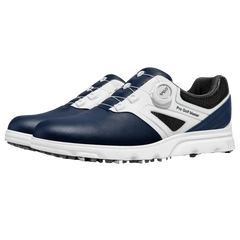
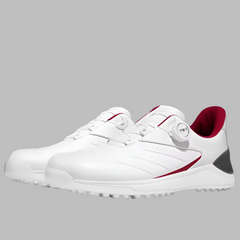
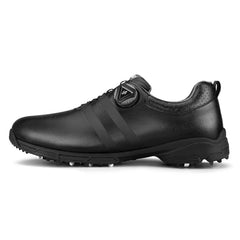
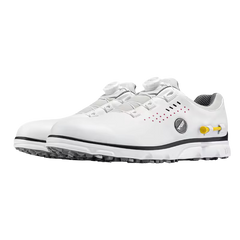
GolfbuyIndia's golf shoes collection includes footwear from PGM-Pro Golf Master, with several models listed as waterproof, and it also has a waterproof golf shoes collection. Specifications and stock vary by model, so check each product page for the outsole, fastening and waterproofing details before you choose. If you want help understanding a pair's features, you can talk to a golf expert on WhatsApp.
What Are the Pros and Cons of Golf Shoes vs Sneakers?
Golf shoes
-
Pros: traction made for a swing, and weather-protected options.
-
Cons: some clubs ask you to change out of them before entering clubhouse areas, so you may need a second pair.
Sneakers
-
Pros: familiar, comfortable, and you may already own a pair.
-
Cons: grip and support are not built for a swing, and some clubs do not allow them.
Conclusion
Golf shoes are built to hold your feet steady through a swing, and the evidence says grip at the feet matters. It does not say they will fix your game. For a first lesson or a casual round where the club allows it, sneakers can do the job. For full rounds or wet ground, a golf-specific sole makes sense. In India, check your club's rules first, then check the outsole, fit and waterproofing against the courses and weather you play in most.
Frequently Asked Questions
Can you wear regular sneakers to play golf?
Often yes, but it depends on the club. One Indian club's dress code table marks runners as not permitted on its golf course, and sneakers also probably lack the ideal grip and support for a swing. Ask before you go.
Are golf shoes required at every golf course?
No. The Equipment Rules allow shoes that help a player obtain a firm stance but do not demand golf shoes, and each club sets its own rules. Some clubs ask for soft-spike golf shoes, and others are relaxed, so check the dress code.
Can you turn regular sneakers into golf shoes?
Some aftermarket kits claim to add spikes to ordinary shoes, but whether one fits depends on the sole's construction and the kit maker's instructions. Added spikes do not turn a sneaker into a purpose-built golf shoe, and a club may still say no. Follow the maker's instructions and ask your club first.
Can golf shoes be used for walking or everyday wear?
Spikeless pairs often can, since many are friendlier for off-course use. Some clubs ask you to take golf shoes off before the clubhouse, so carry a second pair.
Do beginners need golf shoes?
Not on day one. Comfortable trainers are usually fine for a first lesson if the venue allows them. Once you play regular rounds, especially on wet ground, a golf shoe is a sensible upgrade.
Do golf shoes really improve your swing?
They can help your feet stay planted, but nothing here shows they lower scores. In one peer-reviewed test, a metal-spike shoe let golfers generate significantly more back-foot torque with a driver than a flat-soled golf shoe. That measured grip, not scores or distance. Fit and playing conditions matter too.
Further Reading
6 Good Golf Shoes in India for Comfort and Performance in 2026