
























Quick Answer
Choose golf shoes in this order: how and where you play, then the sole, then fit, then how much water protection you need, and last the fastening and comfort. Fit should come before looks or brand. A shoe that moves on your foot is hard to trust during a swing.
-
Note how often you play, whether you walk or ride, and how wet your course gets.
-
Choose spiked or spikeless for those conditions, and check your club's footwear rules.
-
Measure both feet, check width, heel hold and toe room, and use the size chart for that exact model.
-
Decide whether you need waterproof, water-resistant or neither, and read how the maker describes it.
-
Compare the fastening, weight and cushioning, then choose.
Introduction
Two men walk onto the same course on a Sunday morning. One walks all 18 holes every week and starts to feel it in his feet by the back nine. The other rides a cart a couple of times a month and wants one pair that also works at the range. They should not buy the same shoe.
Most buying guides skip that point. They list features or rank models, and you are left to work out which feature matters for your game. This guide follows the order a real decision takes: your habits first, then the sole, the fit, the weather and the details.
India makes the choice harder than a product page suggests. There are monsoon rounds, hot and dry months, damp mornings, and clubs that set their own footwear rules. Buying online also often means choosing without trying the shoe first.
This article does not recommend individual models. It helps you pick the type, the fit and the features, so any list of models becomes easier to read.
What Should You Decide Before Choosing Golf Shoes?

Start with how you play, because it settles more than any feature list.
Walking or riding comes first. A golfer who walks 18 holes spends several hours on his feet, so weight and comfort matter more to him than to someone who rides a cart. Then think about frequency. How often you play affects how quickly shoes wear, as do the surfaces you play on and how you look after them.
Next, think about the ground. Is your course flat or hilly, firm or soft? Is it dry most of the year, or do you often play on wet grass after rain or heavy dew? Be honest about the last question. Many golfers buy for the worst day of the year and then play mostly on dry ones.
Last, note the two things you cannot change: your club's footwear rules and your own foot. A wide foot, or one foot longer than the other, changes what will fit. The fit section below covers both.
A simple way to start is to write down four answers before you open any shop page: how many rounds you play a month, whether you walk or ride, what your course is like in its wettest and driest months, and your budget. Those four lines remove most of the models you would otherwise compare, and they stop you being pulled towards a feature you will never use.
Should You Choose Spiked or Spikeless Golf Shoes?

It depends on the ground you play on and how you move around the club. Neither type is right for every man.
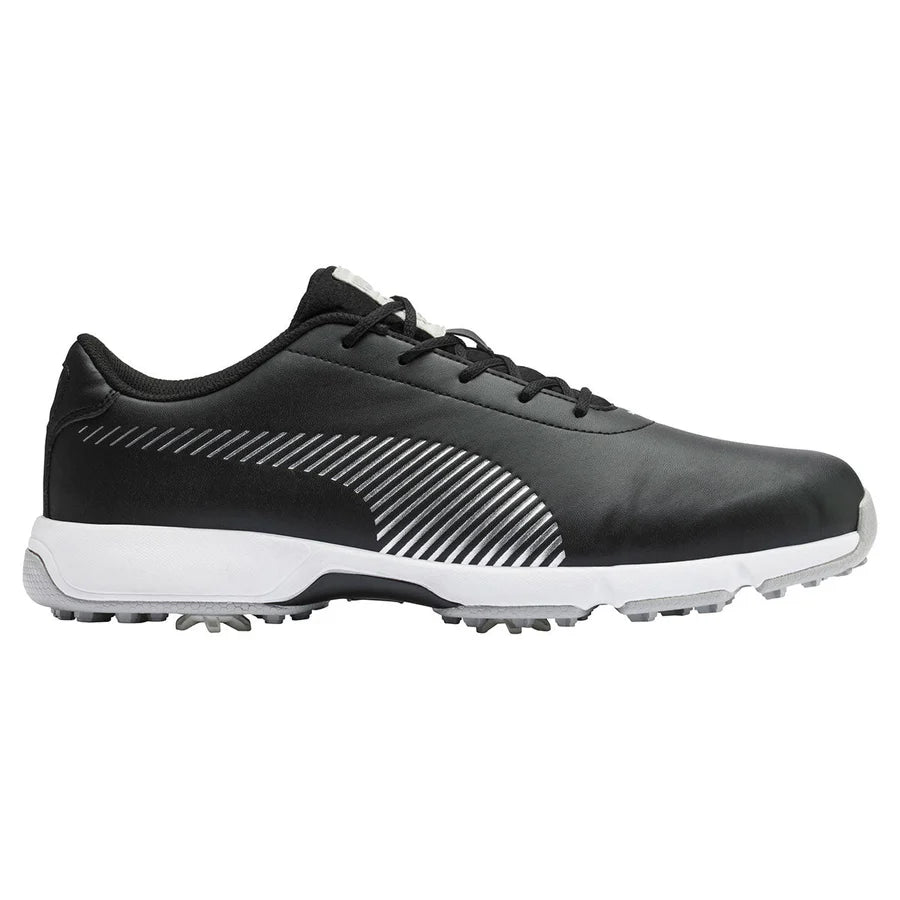
Spiked shoes use replaceable spikes, while spikeless designs rely on studded or dimpled outsoles instead of cleats. Spikeless pairs are often chosen for versatility, because you need not change before you head back to the clubhouse. Actual grip depends on the exact outsole and the ground, so neither type is automatically better for every golfer. If you often play on soft or wet turf, compare the traction design of each shoe, spiked or spikeless. Spikeless designs can suit a golfer who wants one pair for the course and for other areas where the club permits them.
|
Where you play |
What to compare |
|
Wet or soft turf often |
Traction design, and whether removable spikes suit you |
|
Mostly dry, firm courses |
The maker's intended use and the outsole's traction design |
|
Walking between car park, clubhouse and course |
Outsole comfort, and what your club allows indoors |
|
One pair for varied courses |
Versatility, care, spare spikes and club rules |
Do not read the table as a rule. Check the exact outsole construction, not just the label on the listing.
Your club has a say too. A committee may adopt Model Local Rule G-7, which prohibits shoes with traditional spikes designed to penetrate deeply, or with spikes that are wholly or partly metal and may touch the course. Clubs choose whether to adopt it, and they also set their own dress codes, including where golf shoes may be worn. Check the current dress code with your own club before you buy.
If you choose spiked shoes, find out which spike system the shoe uses, because you will need matching replacements. Look over the cleats regularly to check that they are intact and secure. It also helps to know whether spare spikes and a spike wrench are easy to find, because you will need both sooner or later.
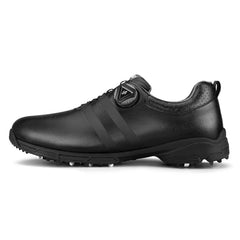
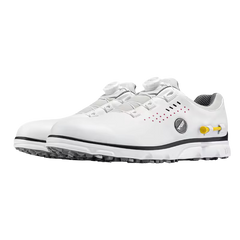
GolfbuyIndia's golf shoes collection lists PGM-Pro Golf Master shoes. If a listing does not say whether the sole takes removable spikes, ask the team before you order.
How Should Men's Golf Shoes Fit?

Fit matters more than any other feature, because nothing else can make up for a shoe that fits poorly. The advice below follows one golf shoe maker's fitting guide, which says neglecting to measure for foot width is the most common mistake that leads to the wrong size.
How do you measure your feet?
Have both feet measured and fit to the larger foot. Do it towards the end of the day because feet may swell, and bring the socks you usually wear on the course. Where arch length and heel-to-toe length differ, take the bigger of the two sizes. A home measurement of length and width in centimetres is a starting point, not a full fitting, because it may miss arch length.
What should you check once the shoe is on?
Check toe room, heel hold, flex and width. For the toes, the guide suggests about half an inch between your longest toe and the end of the shoe, though other makers and shoe shapes may differ, so treat that as one maker's advice, not a universal rule. For the heel, if you can slip a shoe off without unlacing it, it is too big, and there should be no excess movement when you walk. The break of the shoe should fall with the flex of your forefoot. If a shoe feels tight, try a wider width before going up a size, which only helps when the model comes in more than one width. Then simulate your golf swing and check that nothing feels too loose or too tight.
Why does the same size feel different in different shoes?
Because shoe shapes vary with the design of the shoe. So use the size chart for the exact model, not only the number on the box, and treat a converted UK, US or EU size as a starting point. A seller's remark that a model runs small is useful, but the maker's measurements come first, and an online review alone is not a reason to change size. If a listing gives no chart, ask the seller for the insole length in centimetres, if they can measure it reliably, and ask whether the model runs narrow, wide or true to size. Confirm the exchange terms in writing before you pay.
GolfbuyIndia's golf shoes collection lists UK sizes, and on 10 November 2026 its size filter ran from UK 6 to UK 9.5. The homepage lists WhatsApp expert support from 9am to 8pm, seven days a week, so send your foot length in centimetres, your usual size and the model, and ask whether the team can confirm the fit for that exact shoe. Keep the reply.
How Much Waterproofing Do You Need for Indian Conditions?
Only as much as your rounds ask for. A man who plays through the rains needs a different shoe from one who mostly plays dry mornings.
Waterproof, water-resistant and breathable are three different claims. A waterproof shoe is built to keep water out, a water-resistant one copes with light rain or dew but may let water through in a heavy downpour, and breathable describes whether sweat vapour can escape. A listing that says only "water-resistant" is a different promise from one that says "waterproof". Also look at how the finished shoe is built, including its seams, closures and the condition of its materials, rather than relying on the label alone.
Breathability is separate again: it is about sweat vapour leaving the shoe, not about water getting in. On a product page, a line such as "Waterproof: Yes" is the seller's listed specification, not a test result, so look for the maker's explanation of how the shoe is built.
Rain patterns differ across India, so think about the conditions at your own course rather than assuming one national pattern. Monsoon rounds, early dew and humid heat all matter. If you rarely play in wet conditions, breathability may count for more than the strongest water protection.
GolfbuyIndia's waterproof golf shoes collection lists waterproof models from PGM-Pro Golf Master. Stock changes, so check each page.
Are Laces, a Dial or a Strap Better for Golf Shoes?
None is better for everyone. What matters is whether the shoe holds your foot evenly and whether you can adjust it.
Laces adjust through the lace pattern and how firmly you pull each section. A dial-based system usually uses a knob to tighten a cable or lace, and the exact mechanism and release method depend on the system. With a strap, check how securely it holds the foot and whether its adjustment range suits you. Whichever you choose, tighten it, walk around and make a few practice swings. The shoe should hold your foot without pressure points.
BOA is a brand name, not a general word for any dial, so if a listing uses it, confirm the shoe has the genuine system.
What Affects Comfort Over 18 Holes?
Four things can be compared before you buy, though cushioning is subjective and is best judged on a try-on.
Weight. If a listing gives one, check whether it is for a single shoe or the pair, because a number without that is hard to compare.
Cushioning. Read what the maker says about the midsole and insole, then judge the feel when you try the shoe on. If you use orthotics, check that they fit properly in the shoe and do not make it too tight.
Flex. The shoe should bend where your forefoot bends, as the fitting section above explains.
Upper and care. Follow the maker's care instructions for your own shoe, especially if it is waterproof, because makers and materials differ. As a general habit, clean the shoes after a wet round and let them dry in shade or indoors rather than on a heater.
Before the first full round, wear the shoes with the socks you actually play in. A thick winter sock and a thin summer sock change the fit, so if you play through both seasons, check the shoe with each. Then wear the shoes around the house or at the range first, so any rubbing shows up before the first tee and not on the fourth hole.
Which Golf Shoe Suits Your Playing Habits?

A man can fit more than one row below. Pick the row that costs you most when you get it wrong.
|
Your main need |
What to compare |
|
New golfer |
A reliable fit, versatile traction and a price you are comfortable with |
|
Regular walker |
Weight, cushioning, heel hold and fit |
|
Wet or soft courses |
Traction design and water protection |
|
Hot conditions |
Fit, upper construction and what the maker says about breathability |
|
Many different courses |
A versatile outsole and each club's footwear rules |
Go back to the two men from the start. The regular walker may put fit, weight and cushioning first, while the occasional cart golfer may value versatility and price more. They can play the same course in different shoes and both can be right. Set a budget before you browse, then spend it on the row that matters to you. A higher price does not tell you whether a shoe fits your foot.
If you buy from GolfbuyIndia, its homepage also says products are sourced directly from authorised brand distributors. Read the current delivery and returns pages before you order, because terms change.
Before you pay, run one last check. Do you know which spike system the shoe uses, and does your club allow it? Do you have the size chart for that exact model? Does the listing say waterproof or only water-resistant, and does that match your rounds? And do you know who to ask if the fit turns out wrong? If any answer is no, find it out first.
Which mistakes are worth avoiding?
Four are easy to avoid. Do not buy for the wettest day of the year when most of your rounds are dry. Do not choose by style or brand before you check the fit. Do not skip width, the most common sizing mistake. And do not buy spiked shoes before you know your club's rules.
Conclusion
Choose in order: how you play, the sole, the fit, the water protection, then the details. Fit does the most work, so measure both feet, check width, and use the chart for the exact model. A shoe that suits the other man on your course may not suit you, and that is fine. Once you know your own answers, any list of models is easier to read.
Frequently Asked Questions
Are spikeless golf shoes good for beginners?
They can be. Spikeless designs rely on studded or dimpled outsoles instead of cleats and are often chosen for versatility. A beginner who plays mostly dry courses may find that convenient, while one who often plays wet courses should check the traction of the exact shoe and the club's rules.
Do men need waterproof golf shoes in India?
Not always. It depends on how often you play in rain or heavy dew. Waterproofing is a separate property from breathability. A man who mostly plays dry rounds may do better choosing for fit and comfort.
How should men's golf shoes fit?
Snug, with the heel held and room at the toes. One maker's guide suggests about half an inch between your longest toe and the end of the shoe. Measure both feet, check width, and use the size chart for the exact model.
How often should golf shoes be replaced?
There is no fixed interval for every golfer. It depends on how often you play, the surfaces you use and how well you look after the shoes. Inspect the outsole and cleats for wear, check whether the upper is damaged, and notice whether the shoe still holds your foot securely. Follow the maker's care and replacement guidance.
Can you play golf in trainers?
Some clubs allow sport shoes and some do not, and the rules can differ by area of the club. Ask your club for its current rule before you play.
Are expensive golf shoes worth it?
Only if the extra money solves a problem you have, such as fit, grip, waterproofing or comfort on long walks. Price alone does not tell you whether a shoe suits your foot or your conditions.
Further Reading
6 Good Golf Shoes in India for Comfort and Performance in 2026