
























A great swing is built on repeatable movement, clean contact, and speed you can control under pressure. The right golf swing trainer helps you feel the correct positions faster than a thousand swing thoughts, whether you practice at home in Delhi NCR, on the range in Bengaluru, or during a quick office break.
This guide explains how to choose a trainer for your biggest need, how to use it in a 10-minute routine, and what to consider for Indian conditions. If you need a curated shortlist by skill level and budget, Golfbuy can help you compare models and get set up quickly.
What does a golf swing trainer fix?
Different tools solve different problems. Some teach path and face control, others give low-point and turf interaction feedback, and speed systems build fast-twitch patterns safely. The best choice is the one that clarifies the feel in less than five swings. Start by identifying your miss pattern: thin and high right, heavy and low left, two-way miss, or speed loss; then match the trainer to that root cause.
How to choose the right golf swing trainer?
-
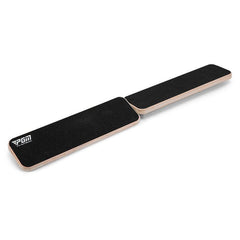
If contact is inconsistent: Pick ground-feedback tools that show strike location and low point. A “divot board” style mat or impact bag reveals whether the club bottoms out before or after the ball.
-
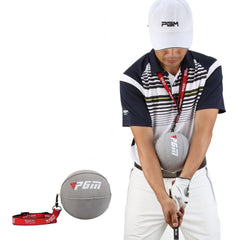
If the clubface is unreliable: Use connection aids and face-control trainers. Simple arm connection balls, clubface stickers, and gate drills train square impact without overthinking.
-
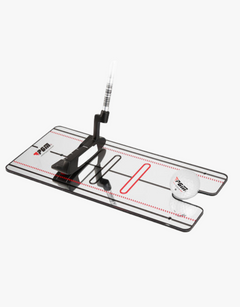
If the path drifts under pressure: Alignment sticks and path rails set neutral geometry. A putting or swing arc can reduce across-the-line or stuck-under moves.
-
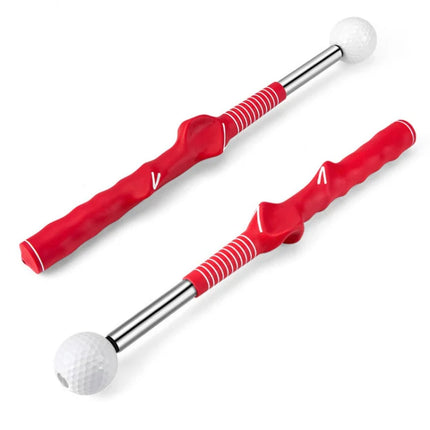
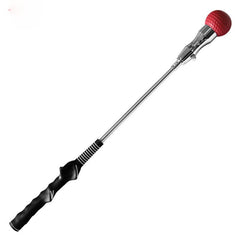
If speed is capped: Speed sticks and weighted warm-up trainers build sequence and speed safely. Three-weight protocols develop faster, balanced swings without losing face control.
-
If posture and sequencing collapse: Shoulder-rotation sticks and trail-arm trainers reinforce turn and delivery while keeping the chest moving through impact.
Quick buyer’s guide by use-case
-
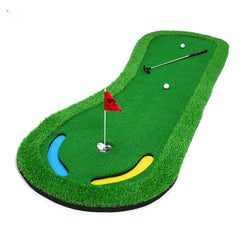
Home practice in small spaces: Choose a compact impact bag, a connection ball, and one alignment stick. These stack in a drawer and cover contact, face, and setup.
-
Range-first routine: Add a ground-feedback mat or strike board to map the low point, plus a speed stick for pre-bucket activation.
-
On-course warm-up: A flexible-shaft warm-up trainer or short speed stick wakes up sequence in three minutes without a net.
-
Junior and women starters: Light connection aids, short alignment sticks, and a small impact bag teach clean contact without fatigue.
-
Competitive amateurs: Combine a divot board, path gates, and a three-weight speed set. This trio handles mechanics, feedback, and speed.
10-minute swing trainer routine that works anywhere
-
Minute 1: Dynamic mobility, torso turns with the club across the shoulders, light hip hinges.
-
Minutes 2 to 4: Connection reps, five swings with an arm connection ball or towel under the trailing arm to feel structure.
-
Minutes 5 to 7: Low-point feedback, ten rehearsals on a ground-feedback mat, brushing ball-then-turf with a mid-iron.
-
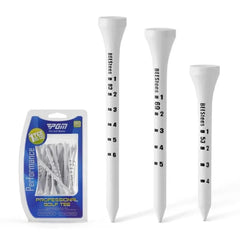
Minutes 8 to 9: Path and face gates, five slow-motion swings through two tees or mini gates set just outside the ball.
-
Minute 10: Speed primer, six swings with a speed stick, dominant side, then non-dominant, finishing with two smooth full-speed rehearsals.
Tips for Indian conditions
-
Humid mornings and monsoon months: Choose corrosion-resistant hardware and non-slip bases so mats do not skate on tile or marble floors at home.
-
Limited indoor space: Prioritise foldable or roll-up designs and short trainers that fit corridors or balconies.
-
Heat management: Use brief, high-quality sets rather than long grinds. Two short sessions beat one sweaty, fatigued session for retaining feels.
How to measure improvement without guesswork?
-
Contact: Count ball-then-turf strikes out of ten on your feedback mat. Target 7/10, then 8/10.
-
Direction: Use a simple fairway finder, ten shots between two alignment sticks 25 yards apart at your stock carry.
-
Speed: Track three-driver average with a phone radar or range monitor once a week. A safe goal is 1 to 2 mph per month in-season.
-
Transfer: One on-course key only. If you trained low point all week, your only thought is “brush ball, then turf.”
Mistakes to avoid with any golf swing trainer
-
Overusing speed tools without face control; get the start line stable first.
-
Grinding perfect mechanics at full speed; build feels slow, then layer speed.
-
Chasing ten aids at once; pick one priority, master it, then rotate.
-
Ignoring setup, alignment sticks are the cheapest consistency upgrade in golf.
Shop with Golfbuy
If you need help matching a golf swing trainer to your miss pattern, Golfbuy can suggest a compact kit for home, a range-friendly setup, or a full-speed system, with guidance on sequencing and safe progressions. Expect practical advice on space fit, storage, and durability for Indian homes and travel.
Conclusion
The fastest way to better ball striking is targeted feedback that you can repeat daily. Pick a golf swing trainer that fixes your primary leak, contact, face, path, or speed, and run a disciplined 10-minute routine. Track gains weekly, keep one foot on the course, and rotate tools as improvements stick.
Ready to build a no-excuses practice kit? Explore compact, proven trainers at Golfbuy and match your setup to your space, schedule, and scoring goals.